Best overall: a distressed graphic boxy tee for an everyday statement. Best for waist definition: a cropped boxy tee. Best for extra coverage: a longline boxy tee. This 2026 guide helps you compare silhouettes before choosing a graphic or checking the apparel at Boundus.
- Best boxy t shirts oversized silhouette: choose width and body length together, not a larger size alone.
- A distressed graphic boxy tee is the default recommendation for a statement-led outfit.
- A cropped boxy tee suits visible waistbands; a longline boxy tee suits extra coverage.
- For Boundus shopping, check garment measurements and graphic placement before choosing a size.
Why this matters
A larger T-shirt and a boxy T-shirt are not the same decision. Going up a size changes several dimensions together; choosing a boxy cut means looking specifically at the relationship between width and length.
That distinction matters when the graphic is the reason you want the shirt. A print you like still needs a neckline, sleeve shape and hem position that work with your outfit. Choose the silhouette first, then choose the statement.
For your 2026 wardrobe, treat these rankings as a decision guide to shapes rather than a claim that every tee with a particular name fits the same way. Distressing, graphics and styling belong in the decision, but garment measurements settle the fit.
What makes the best boxy T-shirts?
Use these criteria before comparing the options. None requires a particular logo or a trend-led size label.
- Width relative to length: Look for the horizontal room you want without accepting an unwanted drop in the hem.
- Shoulder and sleeve shape: Check where the shoulder seam sits and how the sleeve opens around your arm. A roomy torso alone does not settle the silhouette.
- Hem position: Decide whether the tee should reveal, meet or cover your waistband. Judge it with the pants you actually wear.
- Fabric behavior: Consider whether you want structure or a softer drape. Read stated fabric details; a photo does not establish fabric weight.
- Graphic placement and distressing: Inspect where the design and any visible wear sit relative to the neckline, sleeves and hem.
- Layering role: Decide whether the tee is the main visible piece or a layer underneath an open shirt or jacket.
For Boundus boxy T-shirt shoppers, the best choice is the silhouette that works before the graphic sells it. Do not let a product name substitute for checking the shape.
Best boxy T-shirt silhouettes at a glance
| Ranked option | Best for | Standout detail to seek | Key limitation |
|---|---|---|---|
| Distressed graphic boxy tee | Everyday statement dressing | A graphic and visible distressing that suit the intended hem position | Competing graphics or distressed layers need careful styling |
| Cropped boxy tee | Waist definition | A wide body with a deliberately shorter hem | Exposes more of the waistband or torso during movement |
| Longline boxy tee | Extra coverage | Width combined with a lower hem | Extra length can conceal the waistband and pocket details |
| Plain boxy tee | Supporting statement outerwear | A quiet surface and the desired sleeve shape | Does not provide the graphic-led focal point |
The table ranks styling roles, not fabric quality. In 2026, the useful question remains the same: which shape solves the outfit you want to wear?
1. Distressed graphic boxy tee: best for everyday statements
A distressed graphic boxy tee puts the design at the center of the outfit. Look for the width and hem position you want, then examine the graphic and any visible distressing as separate details.
This is the default recommendation if you want the tee to carry the look rather than sit quietly underneath something else. Keep the surrounding pieces simple enough that you can see what the shirt contributes.
Distressed graphic boxy tee pros:
- Gives you a clear focal point for an otherwise plain outfit.
- Lets you build the outfit around graphic placement rather than added accessories.
- Provides a way to choose visible surface detail as well as silhouette.
Distressed graphic boxy tee cons:
- Multiple statement pieces can compete with the main graphic.
- Distressing around a hem or neckline needs close inspection if you prefer a cleaner finish.
Best for: You want a statement tee with roomy proportions, and the graphic is a deliberate part of your outfit.
Try the shirt with the pants you reach for most often. Check whether the print remains visible when the hem falls naturally; do not depend on a tuck to make a shape work unless you intend to wear it that way.
Verdict: Buy this silhouette if the tee is your outfit’s main statement.
2. Cropped boxy tee: best for waist definition
A cropped boxy tee combines width with a shorter body. Its practical styling advantage is control over how much of your waistband remains visible without gathering fabric into a tuck.
Start with the rise of your pants, not the word cropped. The same shirt can meet one waistband and leave a gap above another, so compare the garment length with an outfit you already understand.
Cropped boxy tee pros:
- Keeps waistband details visible without a full tuck.
- Separates a roomy upper shape from the pants below it.
- Lets you prioritize width without automatically accepting a longer body.
Cropped boxy tee cons:
- Reaching overhead changes how much torso the shirt covers.
- A hem that works with higher-rise pants does not necessarily work with lower-rise pants.
Best for: You want a wide silhouette while keeping your belt, waistband or upper pocket area visible.
Stand naturally when checking the length. Then sit down and raise your arms; the resting position is only part of how a short tee wears.
Verdict: Buy this silhouette for visible waist definition; skip it if uninterrupted coverage is essential.
3. Longline boxy tee: best for extra coverage
A longline boxy tee adds body length to a roomy shape. Choose it when a lower hem is intentional, rather than accepting extra length simply because you sized up for more width.
The key check is where the hem lands against your pants. Look at the full outfit from the side as well as the front, especially if you want the tee to remain untucked.
Longline boxy tee pros:
- Provides a lower hem for shoppers who want more coverage.
- Keeps the waistband concealed when that is the intended look.
- Gives an untucked outfit a deliberately extended upper section.
Longline boxy tee cons:
- Can hide a belt, waistband detail or the tops of pockets.
- Needs a separate length check; width alone does not establish the desired fit.
Best for: You want a roomy tee that extends below the waistband and stays visually long.
Before choosing, compare the proposed length with your longest frequently worn shirt. If that existing hem already feels too low, more length is not the solution to a width problem.
Verdict: Buy this silhouette for deliberate coverage; skip it when showing the waistband matters more.
4. Plain boxy tee: best for statement outerwear
A plain boxy tee gives you a wide shape without adding another graphic. It is the supporting option when an open shirt, jacket or other visible layer carries the outfit’s main detail.
Plain does not mean that fit stops mattering. The neckline, sleeve opening and exposed hem become the details you notice when there is no print drawing attention away from them.
Plain boxy tee pros:
- Leaves the main visual role to your outer layer.
- Makes it easier to assess the silhouette without a graphic distraction.
- Avoids adding another print to an already detailed outfit.
Plain boxy tee cons:
- Does not deliver the distressed graphic statement that some shoppers want.
- Requires closer attention to proportion if the tee will be worn alone.
Best for: You already have a statement outer layer and want the tee to support it.
Check the shirt both with and without that layer. You should like the exposed neckline and hem, not just the small section visible in a styled photo.
Verdict: Buy this silhouette for supporting layers; skip it if the tee itself needs to make the statement.
Check the fit before choosing a size
For a practical 2026 fit check, start with a T-shirt you already wear. Lay it flat without stretching it and record 3 measurements: chest width, body length and shoulder width. Match the measurement method shown in the size information you are comparing.
Follow this sequence rather than selecting a size from habit:
- Measure width: Compare the flat chest width with the room you want around your torso.
- Check length: Compare the stated body length with the hem position you want over your pants.
- Check shoulders: Review the shoulder measurement and seam placement, then inspect sleeve shape separately.
- Test movement: With a shirt you own, sit, reach and bend to identify what you want changed in the next one.
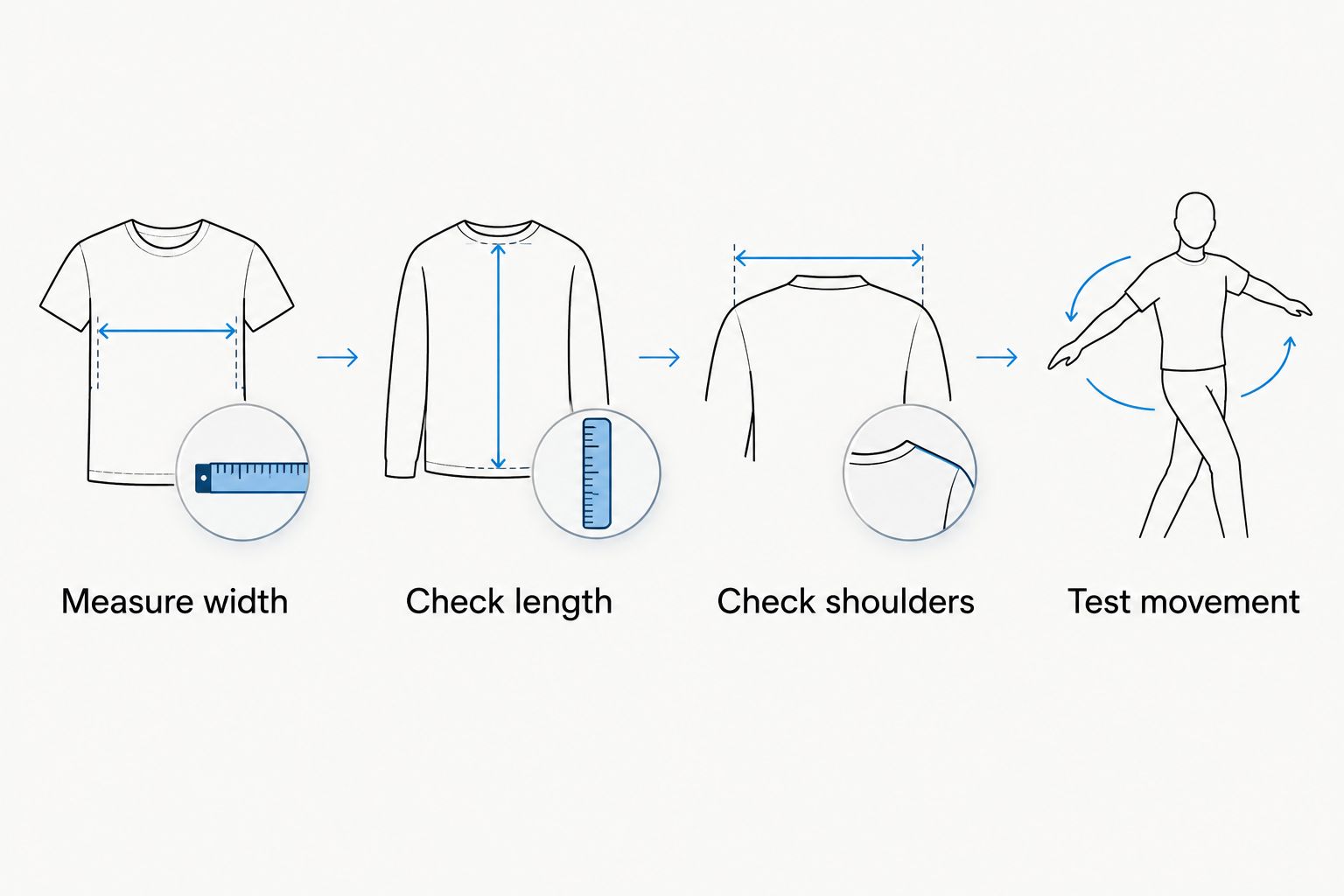
If you are between sizes, compare 2 sizes dimension by dimension. Identify what each changes before deciding whether the extra width is worth the extra length. A size label cannot answer that question by itself.
Read fabric and graphics separately
Fabric weight, composition and construction are different pieces of information. Use a stated weight when one is provided, but do not treat the word heavyweight as a complete description of how a shirt will fit or feel.
A photograph shows appearance, not the full wearing experience. Inspect close-ups for visible details, and use written product information for claims about materials or finishing.
For graphics and distressing, ask practical questions:
- Does the graphic sit where you want the attention?
- Will an open outer layer cover an important part of the design?
- Does visible distressing match your preference for a worn or cleaner appearance?
- Does the design still work at the hem length you intend to wear?
When browsing Boundus boxy T-shirt options in 2026, keep those checks separate. Liking a graphic is a reason to inspect the garment, not proof that its proportions suit you.
How these silhouettes rank
The order follows the criteria above: silhouette, hem position, visible detail and styling role. The distressed graphic option comes first because this guide prioritizes statement-led dressing; cropped, longline and plain options solve different outfit needs.
This is not a product-performance ranking. Choose the use case before treating first place as your answer. A cropped shape is the better decision when waist definition matters more than a graphic-led default.
Which boxy T-shirt should you choose?
Choose a distressed graphic boxy tee if you want the shirt to lead the outfit. Switch to cropped for a visible waistband, longline for extra coverage, or plain when your outerwear already provides the statement.
For a 2026 wardrobe check, try 2 outfits before settling on the silhouette: one with your usual pants and one with a different rise or leg shape. Keep the version that works with clothes you actually wear, not only with an imagined outfit.
FAQ
What are the best boxy T-shirts for an oversized silhouette?
Choose a distressed graphic boxy tee for statement dressing, a cropped boxy tee for waist definition, or a longline boxy tee for extra coverage. Check width and length together before choosing a size.
Is a boxy T-shirt the same as an oversized T-shirt?
No. Boxy describes the relationship between width and length, while oversized describes a roomy fit relative to the wearer; the terms overlap but do not guarantee identical proportions.
Should I size up to get a boxy fit?
Do not size up automatically. Compare garment width, body length and shoulder measurements, because a larger size also changes dimensions you might not want to increase.
Which boxy tee works best with a visible waistband?
A cropped boxy tee is the clearest starting point for a visible waistband. Check its length against the rise of your pants and test how coverage changes when you move.
Is heavier fabric always better for a boxy T-shirt?
No. Choose fabric behavior that matches your preference for structure or drape, and read stated fabric information rather than judging weight from a photograph.
How do I style a distressed graphic boxy tee?
Let the distressed graphic boxy tee carry the main statement and keep competing details limited. Check that your pants and outer layer leave the parts of the design you like visible.
How should I choose a T-shirt from Boundus?
Start with the silhouette you want, then check the product’s stated measurements and visible graphic details. Treat product names as identifiers, not evidence of fit, fabric weight or finishing.
One last thing
Turn away from the mirror and check the side view. A tee can look wide from the front while its hem still lands somewhere you dislike; that is a length decision, not a reason to keep increasing the size.
The best boxy tee is not simply the biggest one. It is the one whose width, hem and statement details work together.